Introduction
The liver is one of the most resilient organs in the human body—but it has its limits. Over time, repeated damage can lead to a serious condition known as cirrhosis, where healthy liver tissue is replaced with scar tissue, impairing function.
Understanding how liver damage turns into cirrhosis is critical for early intervention. Many people don’t realize they have liver disease until it has already progressed. This guide walks you through each stage of liver damage, what causes it, and how you can take action before it becomes irreversible.
What Causes Liver Damage? (Chronic Liver Disease Triggers)
Liver damage rarely happens overnight. It is usually the result of long-term exposure to harmful conditions.
Common causes include:
- Excessive alcohol use (alcohol-related liver disease)
- Nonalcoholic fatty liver disease (NAFLD) is linked to obesity
- Chronic viral infections (hepatitis B and C)
- Diabetes and metabolic syndrome
- Certain medications and toxins
These triggers lead to repeated inflammation, which begins the process of liver injury.
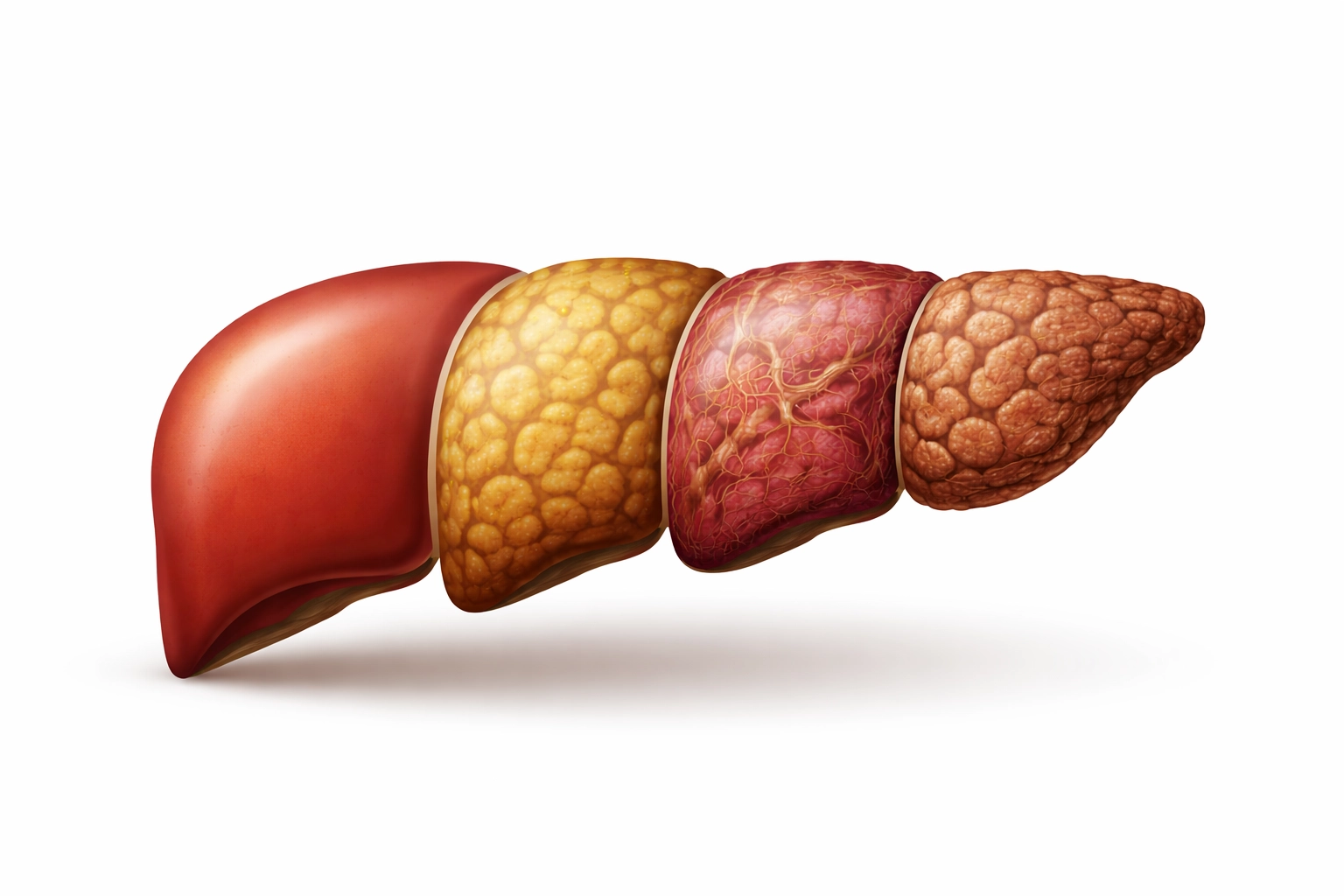
Stage 1: Fatty Liver Disease (Fatty Liver Disease Progression)
The earliest stage of liver damage is often fat accumulation in liver cells, known as fatty liver disease.
Key facts:
- Often has no symptoms
- Can be reversed with lifestyle changes
- Strongly linked to obesity and insulin resistance
Why this stage matters
At this point, the liver is still functioning well. However, if left untreated, fat buildup can trigger inflammation.
Stage 2: Liver Inflammation (Steatohepatitis)
As damage continues, the liver becomes inflamed—a condition called steatohepatitis.
What happens in this stage:
- Liver cells become injured
- The immune system responds with inflammation
- Symptoms may begin to appear
Possible symptoms:
- Fatigue
- Mild abdominal discomfort
- Elevated liver enzymes in blood tests
Stage 3: Fibrosis (Liver Fibrosis Stages)
Fibrosis is where things start to become more serious.
What is fibrosis?
Fibrosis occurs when the liver begins forming scar tissue as a response to ongoing damage.
Key characteristics:
- Scar tissue replaces healthy liver cells
- Blood flow through the liver becomes restricted
- Damage is still partially reversible
Why early detection matters
This is a critical turning point. If intervention happens here, progression to cirrhosis may be slowed—or even stopped.
Stage 4: Cirrhosis (Advanced Liver Scarring Process)
Cirrhosis is the final stage of chronic liver disease.
What happens in cirrhosis:
- Extensive scarring replaces healthy tissue
- Liver function declines significantly
- Complications begin to develop
Common symptoms of cirrhosis:
- Jaundice (yellowing of skin and eyes)
- Swelling in the abdomen (ascites)
- Easy bruising and bleeding
- Confusion (hepatic encephalopathy)
Why Cirrhosis Is Dangerous
Cirrhosis doesn’t just affect the liver—it impacts the entire body.
Potential complications:
- Liver failure
- Portal hypertension
- Internal bleeding
- Increased risk of liver cancer
Once cirrhosis is advanced, treatment focuses on managing complications rather than reversing damage.
Early Warning Signs of Liver Disease (Cirrhosis Symptoms)
One of the biggest challenges is that liver disease is often called a “silent condition.”
Early signs to watch for:
- Persistent fatigue
- Loss of appetite
- Unexplained weight loss
- Mild abdominal pain
By the time more obvious symptoms appear, the disease may already be advanced.
Can Liver Damage Be Reversed?
The answer depends on the stage:
- Fatty liver: Often reversible
- Inflammation: Potentially reversible
- Fibrosis: Sometimes reversible
- Cirrhosis: Usually not reversible, but manageable
Key takeaway:
The earlier you act, the better your chances of preventing long-term damage.
New Treatment Options and Clinical Research (Cirrhosis Progression)
Modern medicine is making significant progress in treating chronic liver disease.
Emerging treatments include:
- Anti-fibrotic medications
- Targeted therapies for inflammation
- Metabolic treatments for fatty liver disease
Role of clinical trials
Clinical trials are essential for developing new treatments that may:
- Slow disease progression
- Improve liver function
- Enhance quality of life
You can explore current research opportunities here.
Could You Qualify for a Cirrhosis Study?
If you’ve been diagnosed with liver disease or are at risk, you may qualify for a clinical study.
Benefits of participation:
- Access to new treatments
- Medical care at no cost
- Compensation for time and travel
Lifestyle Changes to Protect Your Liver (Liver Disease Prevention)
Even small changes can make a big difference.
Recommended steps:
- Limit or avoid alcohol
- Maintain a healthy weight
- Eat a balanced diet
- Exercise regularly
- Manage diabetes and cholesterol
These actions can slow—or even prevent—the progression of liver disease.
Conclusion
Cirrhosis doesn’t happen suddenly—it develops over time through a series of stages, starting with fatty liver and progressing through inflammation and fibrosis.
The key to protecting your liver is early awareness and action. By understanding how liver damage turns into cirrhosis, you can take steps to prevent progression and explore new treatment options.
Next Step
We Have a Study on Cirrhosis of the Liver — See If You Qualify
If you or someone you love is dealing with liver disease, don’t wait until it’s too late.
Contact us and see if you qualify for a cirrhosis clinical study today.
Participating in research could give you access to innovative treatments—and help advance the future of liver care.
This content is for informational purposes only and does not replace professional medical advice. Always consult a qualified healthcare provider regarding any medical concerns.
Share Post: