Introduction
Medical breakthroughs that transform healthcare often begin with clinical research. From life-saving cancer therapies to innovative treatments for chronic diseases, clinical trials play a critical role in advancing medicine and improving patient outcomes.
Yet many people hesitate when considering participation in a clinical study. Common questions include: Is it safe? What are the benefits? What are the risks? Will I receive better care? Can I leave the study if I change my mind?
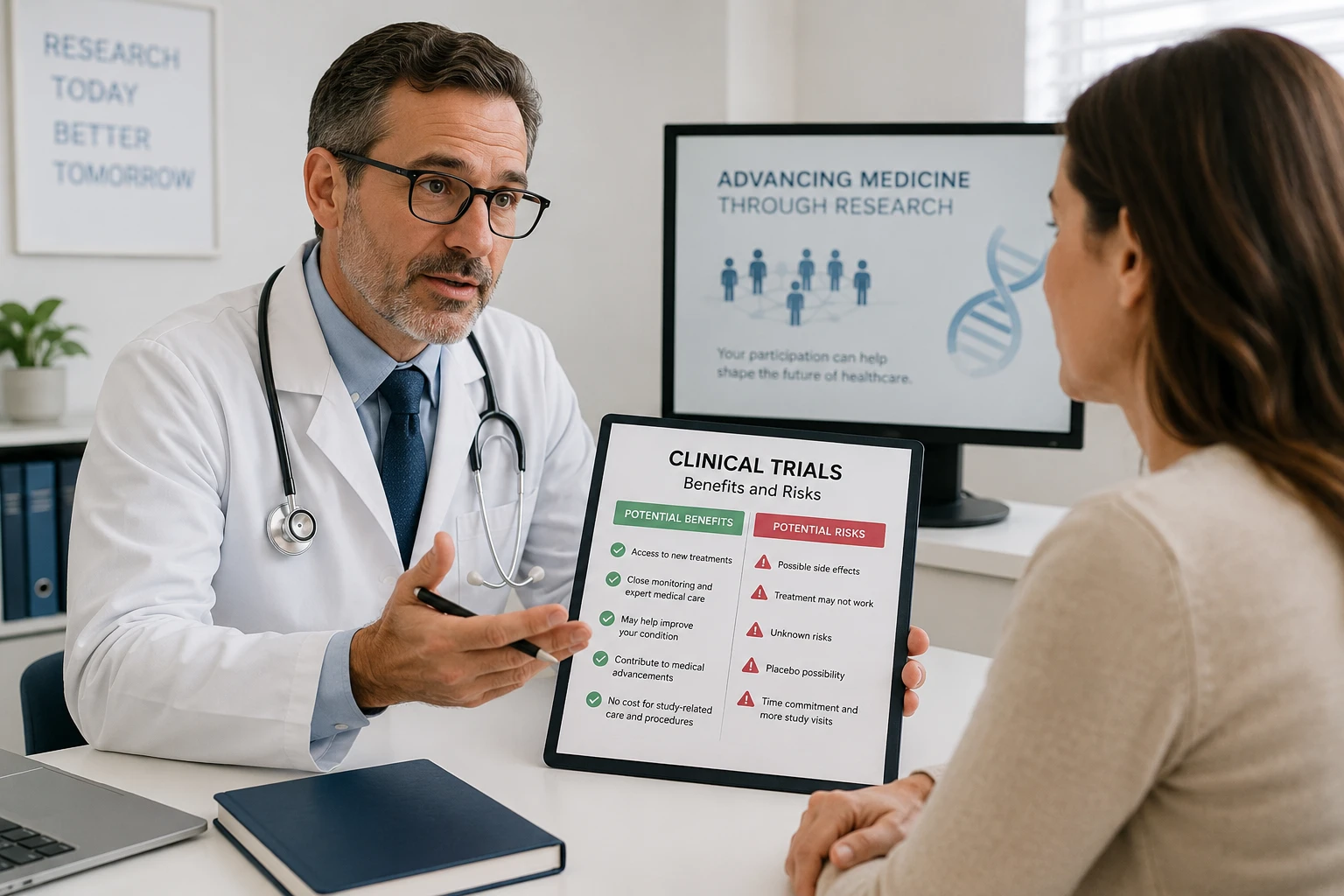
Understanding the benefits and risks of participating in clinical research is essential before making an informed decision. This guide explains how clinical trials work, what participants can expect, and the factors to consider when deciding whether joining a research study is right for you.
How Clinical Trials Work
Understanding how clinical trials work can help reduce uncertainty and build confidence in the research process.
Most studies follow a structured process:
- Pre-screening questionnaire
- Informed Consent (ICF Review & Signature)
- Medical history review
- Physical exam and tests
- Eligibility screening confirmation
- Regular monitoring and follow-up
- Study completion and analysis
Participants receive detailed information before enrollment, including study procedures, potential benefits, known risks, and participant rights.
Importantly, participation is always voluntary.
Clinical Research Study Benefits
Many people choose to participate because of the potential personal and societal benefits.
Access to Innovative Treatments
One of the most significant clinical trial benefits is access to new therapies before they become widely available.
For patients with chronic conditions or limited treatment options, participation may provide access to cutting-edge medical advancements that are not yet available through standard care.
Examples include:
- Novel medications
- Advanced biologic therapies
- Gene therapies
- New medical devices
- Emerging treatment approaches
While access does not guarantee improved outcomes, it can offer opportunities that might not otherwise exist.
Expert Medical Care and Monitoring
Clinical trial participants often receive comprehensive medical evaluations and ongoing monitoring throughout the study.
Research teams typically include:
- Physicians
- Research coordinators
- Nurses
- Specialists
- Patient support staff
This close oversight may lead to:
- More frequent health assessments
- Early identification of health concerns
- Detailed tracking of symptoms
- Improved disease management
Many participants appreciate the additional attention and communication provided by research teams.
Contributing to Medical Advancements
Many volunteers are motivated by the opportunity to help future patients.
Clinical research has contributed to advancements in:
- Cancer treatment
- Cardiovascular care
- Diabetes management
- Autoimmune diseases
- Rare disease therapies
- Gastrointestinal disorders
Every approved medication available today exists because volunteers participated in research studies.
By joining a clinical trial, participants help improve healthcare for future generations.
Potential Financial Benefits
Some studies provide compensation for:
- Travel expenses
- Time commitments
- Study-related visits
- Parking costs
While compensation varies by study, it can help reduce the financial burden associated with participation.
It’s important to understand that compensation should not be viewed as the primary reason for enrolling. The decision should always be based on a clear understanding of the study and personal health goals.

Risks of Clinical Trials
Although clinical trials are carefully designed and monitored, every medical intervention carries some degree of risk.
Understanding these potential risks is critical before enrollment.
Possible Side Effects
New treatments may cause side effects that researchers are still studying.
Potential side effects can range from mild to severe, including:
- Headaches
- Fatigue
- Nausea
- Dizziness
- Injection-site reactions
- Allergic reactions
Researchers provide participants with known safety information before enrollment whenever available.
Unknown Risks
One unique aspect of clinical research is that some risks may not yet be fully understood.
Because researchers are studying a new treatment or intervention, unexpected side effects can occur.
To minimize these risks:
- Safety monitoring occurs throughout the study
- Independent review boards oversee research
- Participants undergo regular evaluations
- Studies can be modified or stopped if safety concerns arise.
Treatment May Not Work
Participation does not guarantee health improvement.
Some participants may:
- Experience no improvement
- Experience improvement similar to standard treatment
- Receive a placebo in certain studies
Researchers explain study design and treatment allocation procedures before enrollment.
Understanding realistic expectations is essential.
Additional Time Commitments
Clinical research often requires:
- Multiple clinic visits
- Medical testing
- Follow-up appointments
- Health questionnaires
- Ongoing communication with study staff
For some participants, these requirements may be inconvenient or demanding.
Before enrolling, evaluate whether the study schedule fits your lifestyle and responsibilities.
Are Clinical Trials Safe?
One of the most common questions is: Are clinical trials safe?
While no medical treatment is completely risk-free, clinical trials are conducted under strict ethical and regulatory standards.
Patients can also explore publicly registered studies through ClinicalTrials.gov, a comprehensive database maintained by the U.S. National Library of Medicine that provides detailed information about ongoing and completed clinical trials.
Several safeguards protect participants:
Institutional Review Boards (IRBs)
Independent ethics committees review study protocols to ensure participant safety and rights are protected.
FDA Oversight
Many studies operate under FDA regulations that require strict safety standards and reporting procedures.
Informed Consent
Participants receive detailed information regarding:
- Potential risks
- Potential benefits
- Study procedures
- Alternative treatment options
Ongoing Safety Monitoring
Researchers continuously monitor participants throughout the study and can make adjustments if concerns arise.
These safeguards help make modern clinical research safer and more transparent than ever before.
Clinical Trial Participant Rights
Every participant has important legal and ethical rights.
These rights include:
- The right to ask questions
- The right to receive study information
- The right to privacy and confidentiality
- The right to refuse participation
- The right to withdraw at any time without penalty
Many people are surprised to learn they can leave a study at any point for any reason.
Participant well-being always remains the highest priority.
Questions to Ask Before Joining a Clinical Trial
Before enrolling, consider asking:
- What is the purpose of the study?
- What are the potential benefits?
- What are the possible risks?
- How long will the study last?
- What tests or procedures are involved?
- Will I receive a placebo?
- What costs are covered?
- Can I continue seeing my regular doctor?
- What happens if I experience side effects?
- Can I leave the study at any time?
These questions can help you make an informed and confident decision. The National Cancer Institute’s clinical trial resources offer additional guidance on questions patients should ask before participating in a research study.
Who Should Consider Participating in Clinical Research?
Clinical research may be worth considering if you:
- Have a condition being studied
- Are interested in new treatment options
- Want to contribute to medical science
- Meet study eligibility requirements
- Are comfortable with study procedures and commitments
Every individual’s situation is different. Discussing participation with your healthcare provider can help determine whether a study aligns with your health goals.
Conclusion
Participating in clinical research offers both opportunities and considerations. Potential benefits include access to innovative treatments, expert medical oversight, financial compensation in some studies, and the chance to contribute to important medical advancements.
At the same time, clinical trials may involve risks such as side effects, unknown outcomes, additional time commitments, and the possibility that the treatment may not work as expected.
The key to making an informed decision is understanding the study, asking questions, reviewing the informed consent documents carefully, and discussing participation with trusted healthcare professionals.
Clinical research continues to shape the future of medicine—and participants remain at the center of that progress.
Next Step
Interested in learning whether a clinical research study may be right for you?
Explore our current studies and speak with our research team today. We can answer your questions, explain eligibility requirements, and help you determine whether participating in a clinical trial is the right choice for your healthcare journey.
Contact Advanced Research Institute today to learn about available clinical research opportunities in your area.