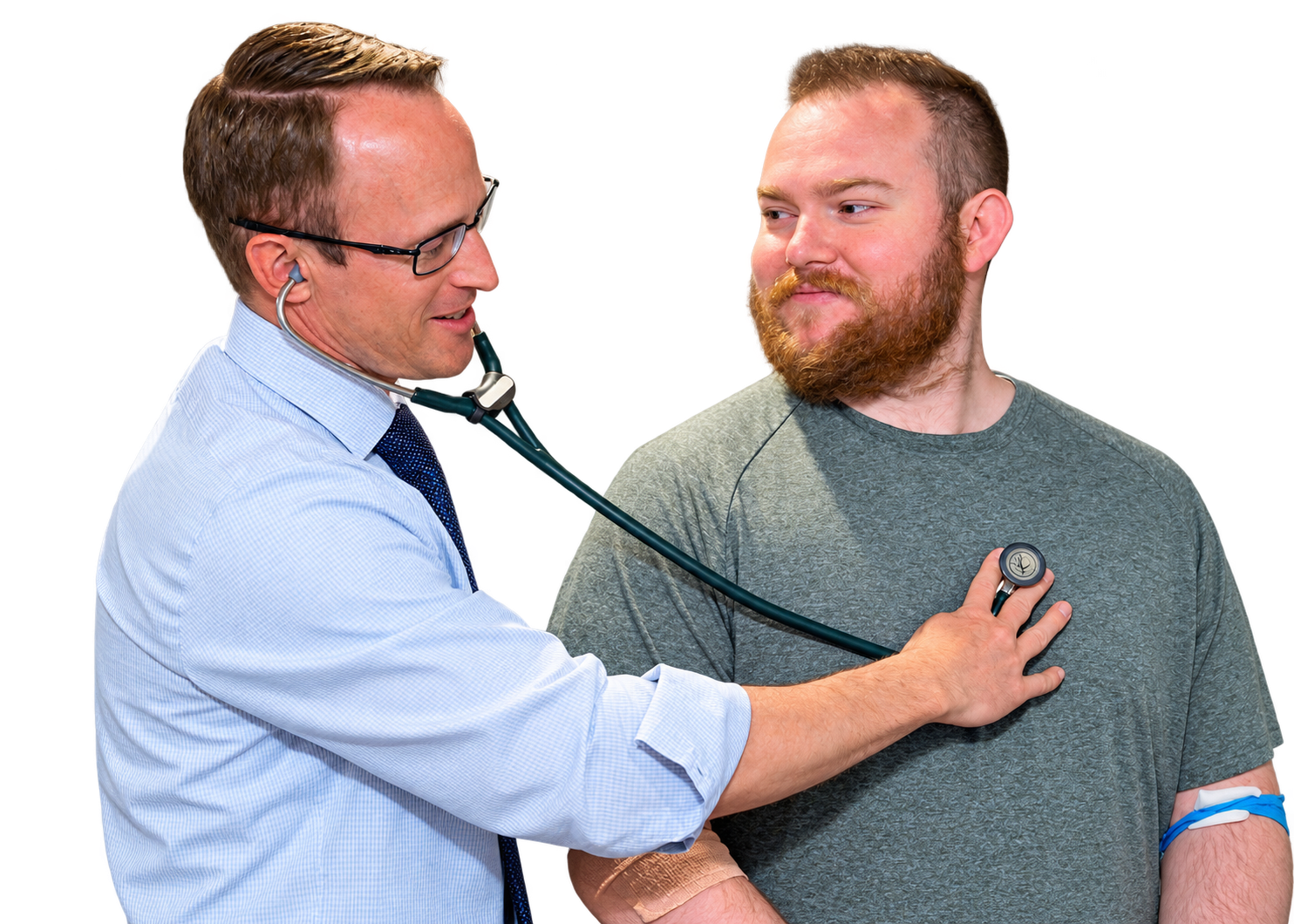
If your doctor has mentioned participating in a clinical trial, you may have a lot of questions.
Why would they recommend research instead of a standard treatment? Does being referred to a clinical trial mean you have run out of options? Are clinical trials only for people with serious or rare conditions?
The answer is often much simpler: clinical trials are an important part of modern medicine and can give eligible patients an opportunity to explore investigational treatment options while helping researchers learn more about a condition.
A recommendation to consider clinical research does not necessarily mean your current care is failing. It may simply mean there is a study that could be relevant to your diagnosis, symptoms, or treatment history.
Here is what patients should know before deciding whether a clinical trial may be worth exploring.
Why Do Doctors Recommend Clinical Trials?
Clinical trials help researchers determine whether investigational medications, treatments, devices, or other medical approaches are safe and effective.
Physicians may tell patients about a clinical trial when there is research underway that relates to their condition.
This may happen when:
- Current treatments have not provided enough symptom relief
- A patient experiences unwanted side effects from available treatments
- There are limited approved treatment options for a condition
- Researchers are studying a new approach that may be relevant to the patient’s diagnosis
- A patient is interested in contributing to medical research
- A physician believes the patient may meet the eligibility requirements for a particular study
Being told about a clinical trial does not mean you are required to participate. Learning about a study is simply an opportunity to understand another potential option.
Does a Clinical Trial Mean I’ve Run Out of Treatment Options?
No.
Clinical trials are sometimes associated with serious illnesses for which conventional treatments have been exhausted, but that represents only one area of clinical research.
Studies are conducted for a wide range of conditions, including common chronic health concerns such as migraines, digestive disorders, asthma, heartburn, constipation, liver conditions, and many others.
Some participants have tried several treatments before considering research. Others may be managing their condition successfully but happen to qualify for a study evaluating a new treatment or approach.
Every clinical trial has its own purpose and eligibility requirements.
What Happens After a Doctor Refers You to a Clinical Trial?
A referral does not automatically enroll you in a study.
The research team first needs to determine whether you may qualify.
This usually begins with a brief conversation about your health history and the study itself. If the initial criteria appear to be a match, you may be invited to complete a more detailed screening process.
Screening can include:
- Reviewing your medical history
- Discussing your current symptoms
- Reviewing medications you currently take
- Bloodwork or other laboratory testing
- Physical examinations
- Diagnostic testing required by the study
- Reviewing previous medical records
The exact process varies depending on the clinical trial.
Most importantly, you should have an opportunity to ask questions and understand what participation would involve before deciding whether to move forward.

What Is Informed Consent?
Before participating in a clinical trial, you will go through a process called informed consent.
Informed consent is designed to make sure you understand important information about the study before agreeing to participate.
This includes information such as:
- The purpose of the clinical trial
- How long participation is expected to last
- What visits or procedures are required
- Potential risks and side effects
- Potential benefits
- Other treatment options that may be available
- Whether a placebo may be used
- How your information will be handled
- Your rights as a research participant
You should never feel pressured to join a clinical trial.
Signing an informed consent form also does not mean you lose control over your participation. Research participants generally have the right to leave a study at any time.
Will I Still Receive Medical Care During a Clinical Trial?
Yes.
Clinical trial participants are monitored throughout the research process according to the study protocol.
Depending on the study, this may involve regular appointments, physical exams, laboratory testing, diagnostic procedures, symptom tracking, or other forms of medical monitoring.
One reason clinical trials require structured follow-up is that researchers need to carefully document both how well an investigational treatment works and any potential side effects that occur.
At Advanced Research Institute, participant safety and comfort are central to the research process. Our research teams work closely with participants to explain study procedures, answer questions, and monitor their health throughout participation.
Do Clinical Trials Cost Money?
Study-related care is provided at no cost to eligible participants in ARI clinical trials.
Depending on the specific study, this may include study visits, medical evaluations, laboratory work, diagnostic procedures, and the investigational treatment.
Many studies also compensate qualified participants for their time and participation. Compensation varies by study and is reviewed with participants before enrollment.
You should always ask the research team exactly which expenses are covered and whether compensation or travel reimbursement is available for a particular study.
Will I Definitely Receive the New Treatment?
Not necessarily.
Many clinical trials use randomization, meaning participants are assigned to different study groups by chance.
Some studies also use a placebo. A placebo looks like the treatment being studied but does not contain the investigational medication.
Placebos allow researchers to more accurately determine whether changes experienced by participants are actually caused by the treatment being studied.
Not every clinical trial uses a placebo, and the research team will explain the study design during the informed consent process.
What Should I Ask Before Joining a Clinical Trial?
If your physician recommends a clinical trial or you find one yourself, asking questions can help you decide whether participation fits your needs.
Consider asking:
- What is the purpose of this study?
- Why might I qualify?
- What treatment is being studied?
- Is there a placebo?
- How often will I need to visit the research site?
- How long does the study last?
- What tests or procedures will I undergo?
- What are the known or potential risks?
- What happens if I experience side effects?
- Can I continue taking my current medications?
- Is study-related care provided at no cost?
- Is compensation available?
- What happens if I decide I no longer want to participate?
There are no bad questions when you are deciding whether to participate in medical research.
Can I Find a Clinical Trial Without a Doctor’s Referral?
Yes.
You do not necessarily need a physician referral to ask about participating in a clinical trial.
Research centers such as Advanced Research Institute allow interested individuals to contact the research team directly. The team can review basic information about your health and determine whether you may be a potential match for a current or upcoming study.
If a study appears appropriate, additional screening can determine whether you meet its full eligibility requirements.
Why Clinical Trial Participation Matters
Every medication and medical treatment available today was shaped by research.
Clinical trial volunteers help researchers answer questions that cannot be answered in a laboratory alone. Their participation helps researchers better understand how treatments work in real people, what side effects may occur, which patients benefit, and whether an investigational treatment should continue through the development process.
Participating in research is a personal decision, and there is never a guarantee that an investigational treatment will improve your condition.
However, every qualified participant contributes information that can help move medical research forward.
Explore Clinical Trials With Advanced Research Institute
Advanced Research Institute has spent more than 25 years conducting clinical research and connecting eligible participants with research opportunities.
We conduct studies across multiple therapeutic areas and locations, including Utah, Nevada, Colorado, and Oregon.
If your doctor has recommended a clinical trial, or if you are simply curious whether there may be a study for your condition, our research team can help you understand your options.
Reaching out does not obligate you to participate.
Interested in learning whether you may qualify for a current or upcoming clinical trial? Contact Advanced Research Institute or book a free consultation to speak with our research team.